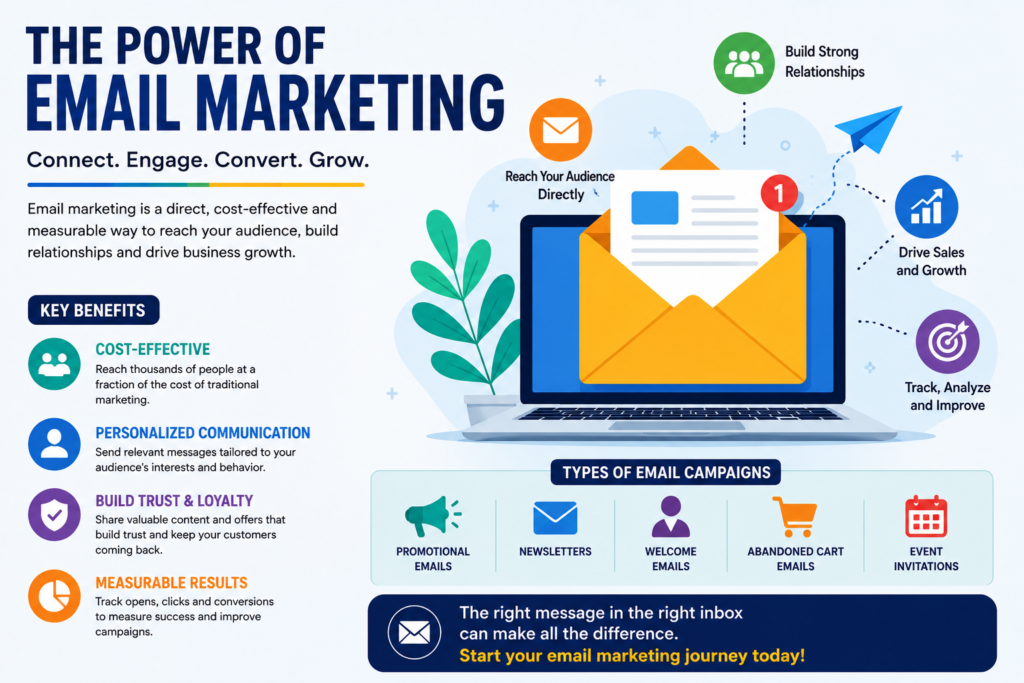

Email marketing is one of the most effective and reliable digital marketing strategies used by businesses today. It involves sending emails to customers and potential clients to promote products, share information, build relationships, and increase sales. Even with the rise of social media and other online platforms, email marketing continues to play a major role in helping businesses communicate directly with their audience in a professional and personalized way.
One of the biggest advantages of email marketing is its ability to reach customers instantly. Businesses can send promotional offers, newsletters, updates, and announcements directly to a customer’s inbox within seconds. This direct communication helps companies stay connected with their audience and maintain strong customer relationships. Unlike social media posts that may not reach every follower, emails are delivered directly to subscribers, increasing the chances of engagement.
Email marketing is also highly cost-effective. Traditional advertising methods such as television commercials, newspaper advertisements, and billboards often require a large budget. Email marketing, however, allows businesses of all sizes to reach thousands of people at a much lower cost. Small businesses and startups especially benefit from email marketing because it offers high returns with minimal investment.
Personalization is another important feature of email marketing. Businesses can customize emails based on customer interests, purchase history, location, and behavior. Personalized emails make customers feel valued and increase the likelihood of interaction. For example, an online store can send product recommendations based on previous purchases or offer special discounts to loyal customers. This targeted approach improves customer satisfaction and boosts sales.
Email marketing also helps businesses build trust and brand loyalty. Regular newsletters with useful tips, educational content, or industry updates keep customers informed and engaged. When businesses consistently provide valuable information, customers begin to view them as trustworthy and reliable. This long-term relationship encourages repeat purchases and customer loyalty.
Another major benefit of email marketing is measurable performance. Businesses can track important data such as open rates, click-through rates, conversions, and customer responses. These analytics help marketers understand which campaigns are successful and which areas need improvement. Unlike traditional marketing, email campaigns can be adjusted quickly based on real-time results.
Automation has further improved the effectiveness of email marketing. Automated emails can be scheduled to send welcome messages, birthday greetings, purchase confirmations, or reminders without manual effort. This saves time while ensuring consistent communication with customers. Many businesses use automated email sequences to guide customers through the buying journey and improve conversion rates.
However, successful email marketing requires a well-planned strategy. Sending too many emails can annoy customers and lead to unsubscribes. Businesses must focus on creating relevant, engaging, and high-quality content that provides value to readers. Attractive subject lines, mobile-friendly designs, and clear calls to action also play an important role in improving campaign performance.
In addition, businesses must respect customer privacy and follow email marketing regulations. Sending spam emails or collecting customer information without permission can damage a company’s reputation. Therefore, ethical marketing practices and customer consent are essential for long-term success.
In conclusion, email marketing remains a powerful tool for modern businesses. It provides direct communication, personalization, cost-effective promotion, and measurable results. By creating valuable content and building strong customer relationships, businesses can use email marketing to increase brand awareness, customer loyalty, and long-term growth in the competitive digital marketplace.