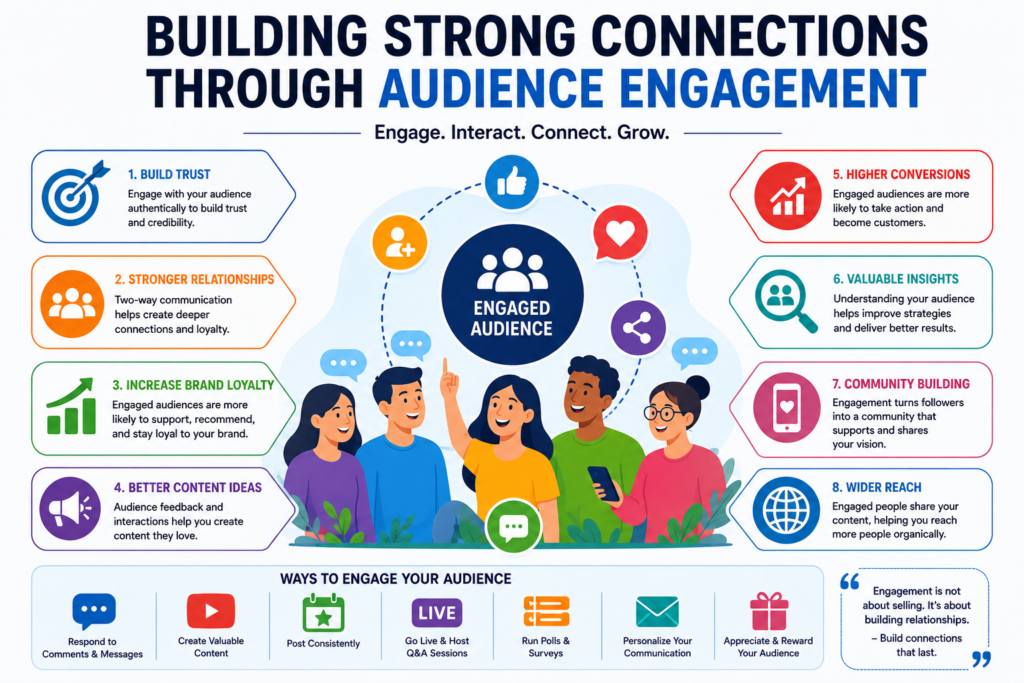

In today’s competitive digital world, engaging an audience has become one of the most important goals for businesses and content creators. Audience engagement refers to the interaction and connection between a brand and its customers through different online platforms such as websites, social media, emails, blogs, and videos. It is not just about attracting people but also about keeping them interested, involved, and connected with the brand over time. Strong audience engagement helps businesses build trust, increase loyalty, and improve overall growth.
One of the main reasons audience engagement is important is because it creates stronger relationships with customers. When businesses communicate actively with their audience by responding to comments, messages, and feedback, customers feel valued and appreciated. This interaction builds trust and encourages customers to continue supporting the brand. People are more likely to purchase products or services from companies that listen to them and understand their needs.
Social media platforms have made audience engagement easier and more effective than ever before. Platforms such as Facebook, Instagram, LinkedIn, and YouTube allow businesses to connect directly with millions of users worldwide. Through likes, comments, shares, stories, polls, and live videos, brands can interact with audiences in real time. This creates a sense of community and helps businesses stay connected with customers on a personal level.
Creating high-quality and valuable content is one of the best ways to engage an audience. Informative blog posts, entertaining videos, eye-catching images, and interactive content attract attention and encourage users to participate. Content that solves problems, answers questions, or provides useful information is more likely to be shared among users, helping businesses reach a larger audience naturally.
Consistency also plays a major role in audience engagement. Businesses that regularly post fresh and relevant content keep their audience interested and active. A consistent online presence helps brands remain visible and memorable. Posting at the right time and understanding audience preferences can improve interaction and increase engagement rates.
Another important aspect of audience engagement is personalization. Customers appreciate content and communication that feel relevant to their interests and needs. Personalized emails, product recommendations, and targeted advertisements make users feel special and increase the chances of interaction. Businesses that understand their audience can create more meaningful experiences that lead to stronger customer relationships.
Audience engagement also helps businesses improve their marketing strategies. By analyzing comments, shares, likes, and customer feedback, companies can better understand what their audience enjoys and expects. This information allows businesses to improve products, services, and future content. Listening to customers can lead to better decision-making and increased customer satisfaction.
However, engaging an audience can be challenging. Online competition is growing rapidly, and users are exposed to large amounts of content every day. Businesses must be creative, authentic, and innovative to stand out from competitors. Simply posting content is not enough; companies need to encourage conversations and provide real value to their audience.
In conclusion, audience engagement is a key factor in successful digital marketing. It helps businesses build trust, strengthen customer relationships, and increase brand loyalty. Through quality content, regular interaction, and personalized communication, businesses can create meaningful connections with their audience. As digital communication continues to evolve, audience engagement will remain essential for long-term business success and growth.